
How Country Tough Trail Versatility Started
Feb 17, 2026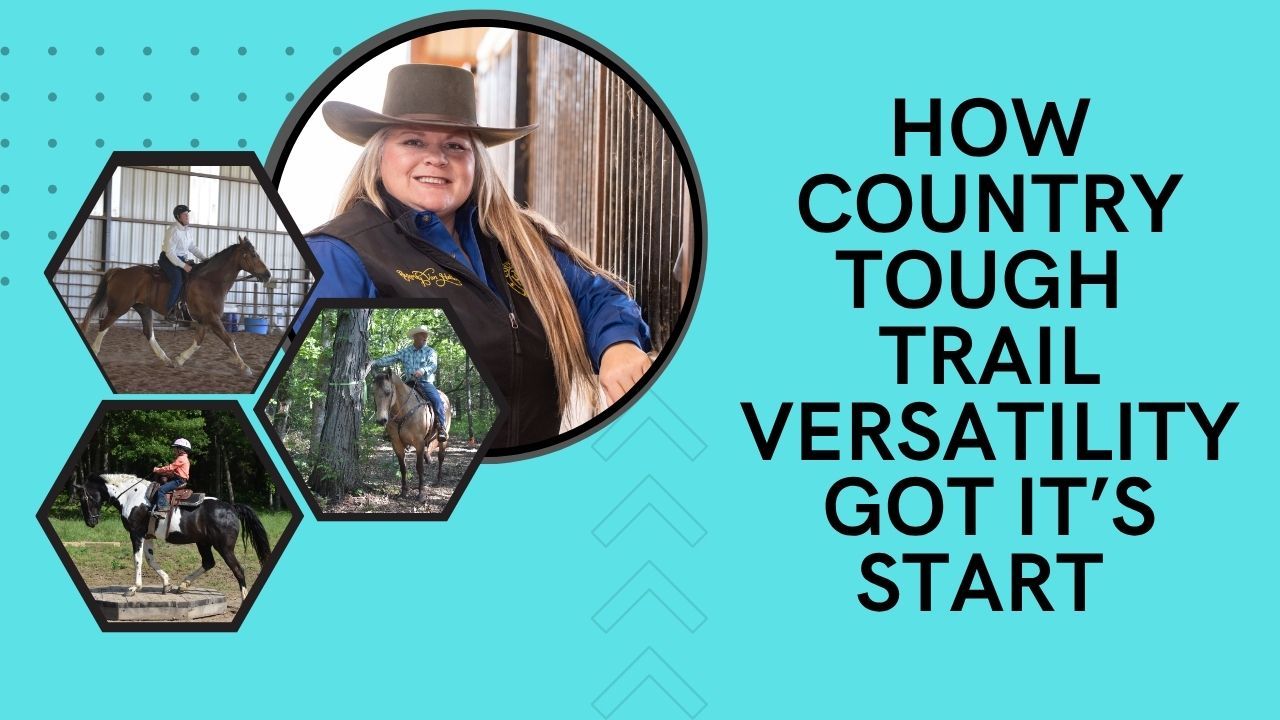
How did CT2V get started?
Brandy Von Holten went to an obstacle competition only because someone canceled on her friend, and there was an opening at another trail facility, now closed, called Eagle Ranch.
At the competition, she competed in the UHCA (Ultimate Horseman Challenge Association), a sister association to EXCA (Extreme Cowboy Association). These are equine obstacle competitions in which speed is highly important.
UHCA had two courses: high-impact and low-impact. They divide the two. High impact is a higher level of difficulty.
They will allow you to compete on both courses as long as you qualify. You can ride up, but people cannot ride down. Brandy just wanted to get experience on the high-impact course. She finished dead last in novice and was disqualified in intermediate for going over the time limit. From then on, she was hooked. To quote her favorite movie, nobody puts baby in the corner.
The weekend before that, she had qualified for the national championship in Olympic Taekwondo as an Olympic-level athlete. It was difficult to go from being the top of one sport to the absolute bottom of another.
She attended every UHCA event that year and placed third overall in novice and sixth overall in intermediate.
The following year, she won novice with her first buckle and championship saddle and placed fifth in intermediate. She also competed at the EXCA World Championship that year and placed sixth out of one of their largest divisions.
In the third year, she got reserve champion in intermediate, and at the end of the year, she moved to the professional division because she started teaching clinics at Von Holten Ranch when it opened.
Here's the deal. It was extremely difficult to go straight into UHCA and EXCA because Brandy lacked many horsemanship skills, such as side-passing, spins, foot placement, collection, leads, and overall confidence. She went way too fast, way too soon.
She then found out about an association called the AHCA (American Horsemens' Challenge Association). Since there were no qualifying events in Missouri, she was able to buy in and attend the national championship for her first-ever competition as a pro rider.
She ended up third at nationals. AHCA doesn't emphasize speed as much as the other associations, but they stack obstacles together.
For example, one time she had to do a bridge which counted as one obstacle; however, it was a bridge with tree limbs screwed to the side, connected to a water box with holes in it, which was then connected to a box with a grate over it, then it made a 90-degree turn to another water box with a fog machine with floating balls in it. All of that was considered one obstacle.
She hung around at AHCA for three years. She took third in the pro division, reserve champion in greenhorn, and reserve champion in lead line.
Von Holten Ranch also hosted an event called ACTHA (American Competitive Trail Horse Association). ACTHA went out of business, so we could no longer host that. There was another association similar to that called ETS (Equine Trail Sports). We loved ETS, but there weren't many hosts in the area. Both these associations emphasized trail horses, which was great since we are an event facility with trail riding being our main attraction.
In the arena and on the trail, ETS has three levels of each obstacle: beginner, intermediate, and advanced.
Another association we hosted was ASHA (American Stock Horse Association). It was a versatility that combined a horsemanship pattern, obstacles, and a cattle class. Most of our competitors were college teams. We had difficulty getting other people to realize they could compete in it, but we loved the versatility aspect.
Each association we hosted brought something different. Each one is wonderful at what they do. We saw a need to slow things down and emphasize the trail horse.
This is where CT2V began. We loved the horsemanship pattern because it creates a curriculim. So many people want to improve, but they don't know where to start. That's where the pattern gives them certain elements to work on in micro-chunks.
Obstacles help build a relationship between the rider and the equine, but adding the speed element should come later. Slow is smooth and smooth is fast. Riders need to master obstacles one at a time.
As owners of a trail facility, we recognized the need for a safety component. We wanted to help the trail-riding community set goals, tackle obstacles, and improve horsemanship.
Disqualifications need to be few and far between. People work too hard to come to these, and everyone is just trying to improve.
Groundwork is about setting the equie up for a strong foundation. We have multiple in-hand divisions to help set the foundation right. Starting in 2027, we'll have three different youth divisions.
CT2V is a community of horse enthusiasts, and we love what we have created!
We now have a calendar of events. You can check it out here.
Stay connected with news and updates!
Join our mailing list to receive the latest from Von Holten Ranch.
Don't worry, your information will never be sold or shared.
We hate SPAM. We will never sell your information, for any reason.
